1st & 2nd TIMOTHY cartoons - letters from Paul
Both books are attributed to Paul, written to Timothy, a young church leader & Paul’s protégé.
Offering guidance on church leadership, doctrine, & personal perseverance.
These are among the "Pastoral Epistles" (along with Titus), written to instruct and encourage early Christian leaders.
1 Timothy
Written around 62-64 AD, 1 Timothy focuses on church organization and sound teaching. Paul begins by warning Timothy to guard against false teachers who misuse the law and promote myths (1:3-11). He expresses gratitude for God’s mercy in his own life (1:12-17) and urges Timothy to hold fast to faith (1:18-20). Paul provides instructions on worship, including prayer for all people (2:1-8), and outlines roles for men and women in the church (2:9-15). He then details qualifications for overseers (elders) and deacons, emphasizing character and competence (3:1-13). The letter underscores the church as the pillar of truth and warns against false doctrines, like asceticism (4:1-5). Paul advises Timothy to train in godliness, teach faithfully, and care for various groups—widows, elders, and slaves—while maintaining personal integrity (5:1-6:2). He concludes by condemning the love of money and urging Timothy to pursue righteousness (6:3-21).
2 Timothy
Likely written around 66-67 AD, near the end of Paul’s life while imprisoned in Rome, 2 Timothy has a more personal and urgent tone. Paul encourages Timothy to remain steadfast despite suffering, reminding him of his godly heritage and calling (1:3-7). He urges boldness in sharing the gospel and enduring hardship like a soldier, athlete, or farmer (1:8-2:13). Paul warns against quarrels and false teachers, like Hymenaeus and Philetus, who claimed the resurrection had already occurred (2:14-19). He calls Timothy to be a pure, useful vessel for God, avoiding evil and pursuing virtue (2:20-26). Describing the last days as times of moral decline (3:1-9), Paul points to Scripture as the foundation for teaching and perseverance (3:10-17). In a moving final charge, he exhorts Timothy to preach the word relentlessly, as Paul senses his own death is near (4:1-8). He ends with personal requests and greetings (4:9-22).
Money, money, Money
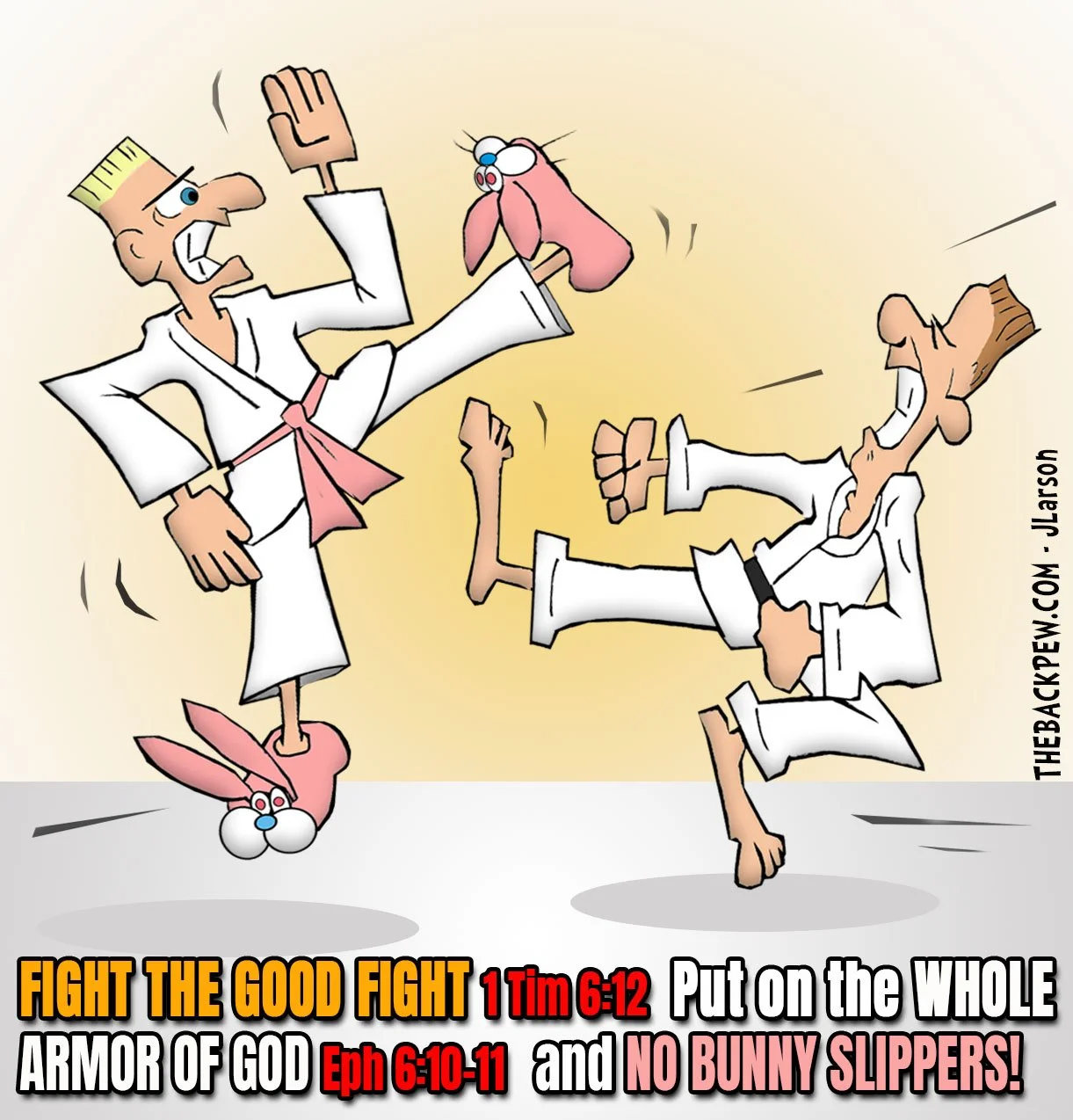
FIGHT the good FIGHT
Respect your Elders
Key Themes
Church Leadership: 1 Timothy provides practical guidelines for organizing and leading the church.
Sound Doctrine: Both letters stress the importance of resisting false teachings and upholding truth.
Perseverance: Paul encourages Timothy to endure challenges, especially in 2 Timothy, where suffering is prominent.
Mentorship: The letters reflect Paul’s role as a mentor, passing the baton to the next generation.
Together, 1 and 2 Timothy offer a blend of practical instruction and heartfelt encouragement, reflecting the challenges of early Christian leadership and the importance of faithfulness.
Key Themes
Church Order: Paul provides criteria for appointing elders to lead and stabilize the church.
Sound Teaching: Titus is tasked with opposing false doctrine and promoting truth.
Good Works: Christian behavior—marked by integrity and kindness—serves as a witness to the world.
Grace and Salvation: God’s mercy is the basis for transformed lives and hope in Christ’s return.
Titus is a concise yet practical guide for church leadership and Christian living, tailored to the needs of a young church in a morally lax environment.


Titus cartoons -
The Book of Titus is a short epistle attributed to Paul, written around 62-64 AD.
A Pastoral Epistle, alongside 1 and 2 Timothy, is addressed to Titus.
A Gentile convert and Paul’s co-worker, whom Paul left in Crete to organize the church there.
The letter provides guidance on leadership, sound doctrine, and Christian living in a challenging cultural context.
Chapter 1
Paul begins by greeting Titus and explaining his purpose: to appoint elders in every town in Crete (1:1-5). He lists qualifications for elders, emphasizing integrity, self-control, and adherence to sound doctrine, as they must counter rebellious false teachers who disrupt households (1:6-16). Paul describes these opponents as deceitful and unfit for good works, likely referencing local Cretan tendencies toward laziness and dishonesty (1:12).
Chapter 2
Paul instructs Titus to teach various groups—older men, older women, younger women, young men, and slaves—how to live godly lives that reflect their faith (2:1-10). He emphasizes that such behavior will make the gospel attractive to outsiders. Paul grounds this ethical teaching in the grace of God, which trains believers to reject ungodliness and await Christ’s return (2:11-15).
Chapter 3
focuses on Christian conduct in society. Paul urges Titus to remind believers to submit to authorities, avoid quarrels, and show gentleness, reflecting God’s kindness and mercy in their salvation (3:1-7). He stresses doing good works as a practical outworking of faith, while avoiding divisive disputes (3:8-11). The letter closes with personal instructions—Paul asks Titus to join him in Nicopolis and sends greetings to mutual friends (3:12-15).
Money, money, Money
Money, money, Money